
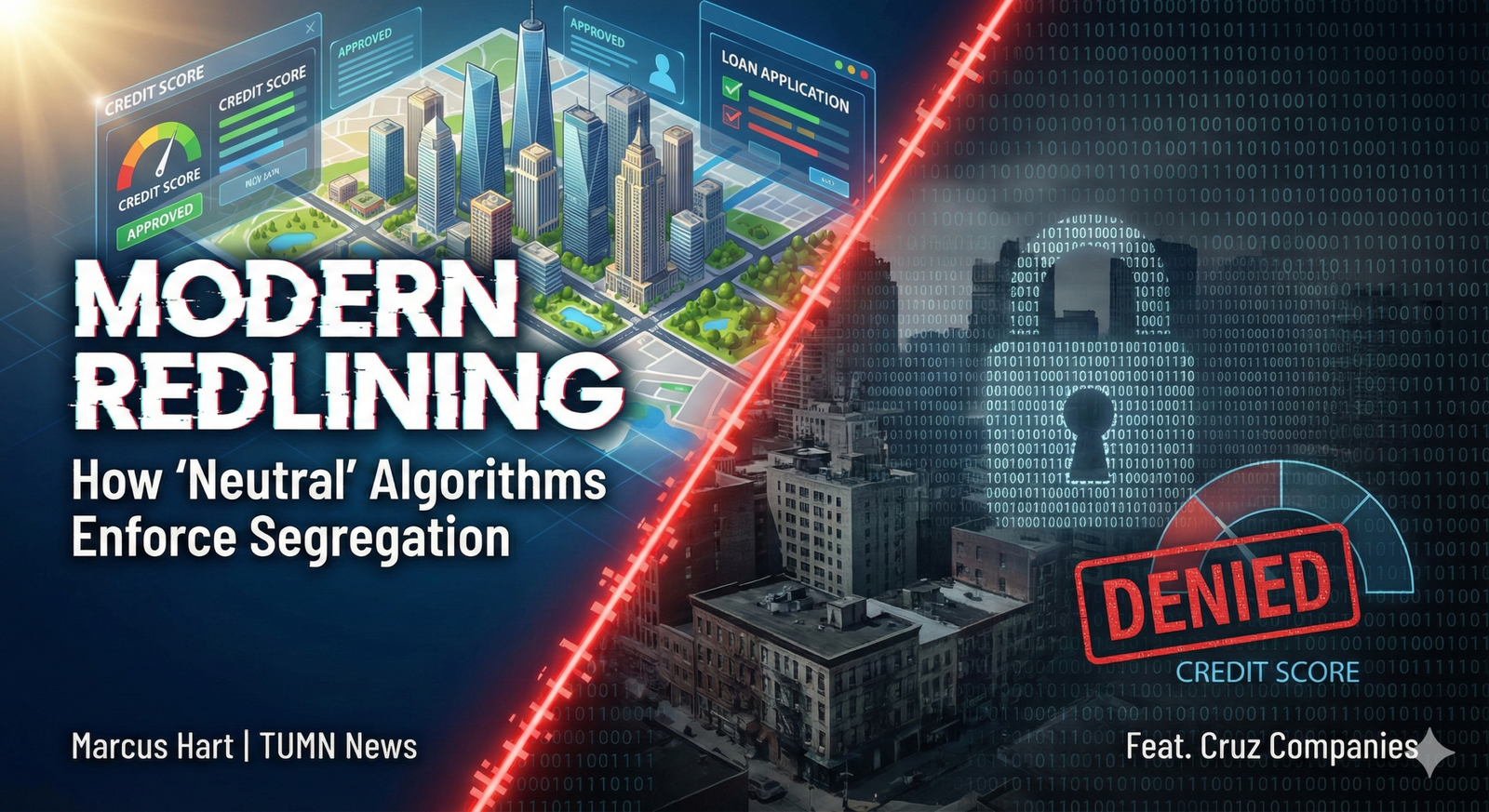
Modern Redlining: How “Neutral” Algorithms Are Enforcing Segregation in 2025
By Marcus Hart | TUMN News
Modern Redlining is no longer about drawing lines on a map; it is about the algorithms, credit scores, and “neutral” policies that silently enforce segregation in 2025.
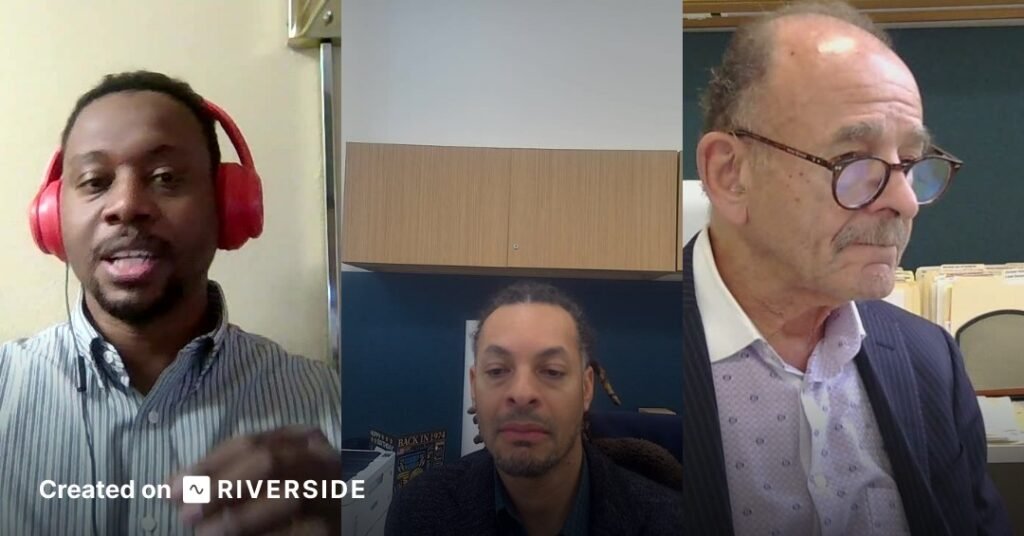
A new investigative report from The Transform U! Live Show challenges the widely held belief that housing and lending discrimination are relics of the past. Featuring exclusive insights from John B. Cruz III and Justin Cruz of Cruz Companies—one of the nation’s oldest and largest Black-owned construction firms—the data suggests that corporate policies regarding bonding capacity and background checks have effectively become the “Jim Crow 2.0” of the 21st century.
The Reality of Modern Redlining in Construction
For decades, minority entrepreneurs have been told that if they simply “play by the rules”—improve their credit score, gain years of experience, and build capital—they will finally achieve parity with their white counterparts. However, the Cruz case study reveals a goalpost that keeps moving.
Modern redlining doesn’t use racial slurs; it uses corporate jargon.
Despite a bonding capacity of over $100 million and a 75-year track record of building skylines in Boston, Cruz Companies reports continued denials on projects where they are the low bidder. The reason cited by owners is often a vague “discomfort” with the firm’s “capacity.”
“Your capacity for doing this project is always questioned differently than white firms,” says COO Justin Cruz. “It is like being pushed down… It forces you to navigate roadblocks that shouldn’t exist.”
This subjective disqualification allows institutions to bypass objective financial strength, effectively locking high-performing minority firms out of major contracts.
The “Yellow Brick Road” Deception
To understand the psychological toll of modern redlining, you have to listen to John B. Cruz III. He describes the experience of the Black entrepreneur not as a straight line, but as a rigged game.
“I’ve so many times in the past felt like I’m in the Wizard of Oz, looking at the castle in the distance that I want to get to,” John Cruz explains. “But the yellow brick road is always changing for us.”
He notes that while the “glass ceiling” isn’t as harsh-looking as it was in 1948, the restrictions remain. The curtain has simply changed texture. This constant shifting of requirements—asking for more paperwork, higher reserves, or extra guarantees—is a hallmark of how modern redlining functions in the banking sector.
The Failure of the Non-Profit Model
In a controversial but critical analysis of urban wealth, CEO John B. Cruz III argues that the reliance on Community Development Corporations (CDCs) to revitalize urban areas is fundamentally flawed.
“CDCs don’t build black wealth,” Cruz states.
While non-profits serve a function, the construction and development profits often flow to majority-owned firms outside the community, leaving the neighborhood with services but no equity. The report argues for a strategic pivot toward supporting for-profit minority developers who circulate wealth within the community.
According to data on the Racial Wealth Gap, business ownership remains one of the fastest ways to close the disparity, yet banking access remains the primary choke point.
Fighting Modern Redlining with Human-Centric Risk
Perhaps the most actionable insight comes from Cruz Companies’ property management division. Defying industry standards, they reject the “auto-decline” algorithms that drive modern redlining in the rental market.
Instead, they employ a “Case-by-Case” analysis, evaluating the person rather than the paper.
- The Problem: Most landlords see an eviction history and auto-reject.
- The Cruz Solution: They analyze the context, understanding that a “scarred history” often comes from systemic issues, not character flaws.
Data suggests this human-centric approach not only provides housing stability but fosters long-term tenant retention, challenging the notion that “scarred history” equates to financial risk.
Conclusion: The Media Imperative
The findings are clear: When the “paper” (credit reports, bonding capacity, background checks) is designed to discredit minority leadership, the only recourse is to generate a new record of authority.
“If the system relies on your silence,” says TUMN Founder Marcus Hart, “then publishing your own narrative is a strategic imperative.”
If we do not expose modern redlining for what it is, the “neutral” algorithms will continue to write our history for us.
Reclaim Your Narrative
Leaders and experts facing systemic barriers are invited to apply to the TUMN Contributor Network, a platform designed to build the digital authority necessary to bypass traditional gatekeepers. TUMN Contributor Network, a platform designed to build the digital authority necessary to bypass traditional gatekeepers.
[Click here to apply to become a TUMN News Contributor.]
Pingback: Modern Redlining Exposed: How "Neutral" Policies Are Killing Black Wealth (feat. Cruz Companies) - Transform U Media Network